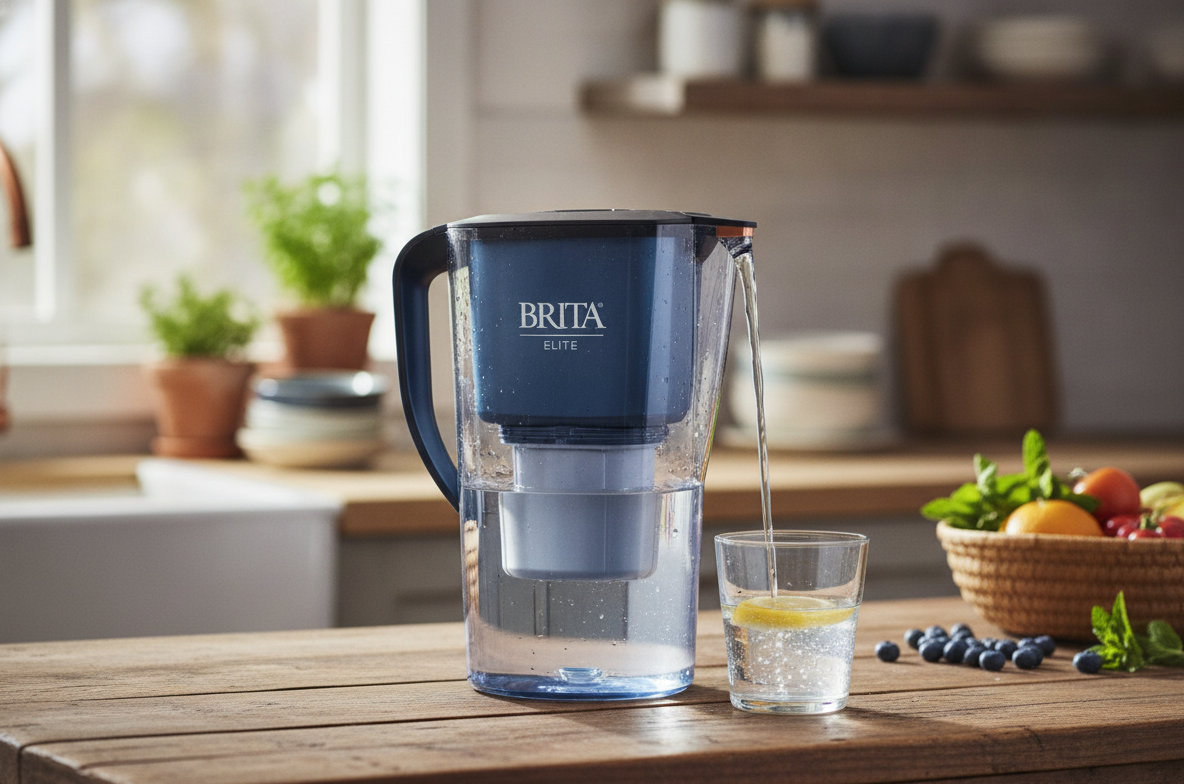
A new carbon cartridge that runs slow for the first few days is usually holding trapped air, not clogged. Brita Elite filters (formerly Longlast+) are designed with denser filter media than Brita Standard filters. This design allows them to reduce more contaminants, but it also means they filter water at a slower rate by design. Some slowness is therefore normal for an Elite filter. When the drip becomes excessively slow, or stops entirely, it points to a specific problem that you can often fix yourself.
Is Your Brita Elite Filter New? Air Bubbles and Preparation Issues
The inherent slowness of Brita Elite filters comes from their advanced filtration technology. These filters use a compressed carbon block and ion-exchange resin to target a wider range of contaminants compared to Brita Standard filters. This denser media physically slows the water flow, increasing contact time and allowing for more thorough contaminant reduction. Expect your Elite filter to drip at a noticeably slower pace than a Brita Standard filter would.
Improper Filter Preparation
One of the most common reasons a new Brita Elite filter runs slowly is improper preparation. New filters often contain trapped air within their media. This air creates resistance, preventing water from flowing smoothly through the filter.
Always follow the specific preparation instructions printed on the Brita Elite filter's own packaging. These steps often differ from those for Brita Standard filters.
- Remove the new filter from its packaging.
- Completely submerge the filter in cold water and gently shake it for at least 15 seconds. This helps release trapped air bubbles.
- Rinse the filter under cold running water for 15 seconds.
- Insert the prepared filter into your Brita pitcher or dispenser reservoir.
If the flow remains unusually slow after the first fill, remove the filter and repeat the soaking and shaking steps. Sometimes a second attempt is needed to dislodge stubborn air pockets.
Filter Not Seated Correctly
Even a perfectly prepared filter can run slow if it is not seated correctly in the pitcher or dispenser reservoir. An unevenly placed filter can create a bypass, allowing unfiltered water to leak around the edges, or it can restrict the proper flow path, leading to a slow drip.
- Empty the reservoir and remove the filter.
- Inspect the reservoir opening for any debris or obstructions. Clean it if necessary.
- Position the filter in the opening and push it down firmly and evenly. Make sure it sits flush and feels secure. You might feel a slight resistance as it settles into place.
Confirm the filter is fully engaged. If it looks crooked or wobbly, remove it and try again. Proper seating makes sure all water passes through the filter media.
Clogged or Expired Brita Elite Filter
Over time, filter media naturally accumulates the contaminants it removes from your tap water. Sediment, chlorine byproducts, and other dissolved solids can build up, gradually reducing the filter's porosity and slowing the flow rate. This slowdown is actually a sign that the filter is doing its job effectively, trapping impurities.
Brita Elite filters are rated for a lifespan of 120 gallons or approximately 6 months, whichever comes first. Exceeding this recommended lifespan almost guarantees a significant slowdown in filtration speed. More importantly, an expired filter cannot effectively reduce contaminants, meaning your water quality will decline.
If your tap water has a high mineral content (often called hard water) or visible sediment, your filter might clog faster than the 6-month estimate. In such cases, you may notice a slowdown much sooner.
Replacing a Clogged or Expired Filter
If your Brita Elite filter is approaching or has exceeded its 6-month lifespan, or if you have filtered more than 120 gallons, replacement is the most effective solution for a slow drip. Continuing to use an old filter will not only result in a frustratingly slow flow but also compromise the quality of your filtered water.
For consistent performance and cleaner water, consider using the Brita Elite Replacement Water Filter, Pitchers and Dispensers, 4 Pack. Each Brita Elite filter is designed to last for 120 gallons or about 6 months, meaning a 4-pack provides a supply for two years of filtered water. These filters are WQA and NSF/ANSI certified, reducing 99% of lead and over 30 other contaminants. They use advanced filtration to deliver great-tasting water.
- Remove the old, expired, or clogged filter from the reservoir.
- Thoroughly clean the pitcher reservoir with warm, soapy water to remove any buildup.
- Prepare the new Brita Elite filter according to the specific instructions on its packaging. Remember to submerge and shake it to release air, then rinse it.
- Insert the new filter into the clean reservoir, pushing it down firmly and evenly until it is securely seated.
- Fill the reservoir with tap water and discard the first few pitchers of filtered water as instructed by the manufacturer. This primes the filter and removes any loose carbon dust.
- Reset your pitcher's filter indicator, if it has one, so you can track the new filter's lifespan.
Using a Brita Elite filter helps reduce waste. Each Elite filter replaces up to 900 single-use 16.9 oz plastic bottles, offering both environmental benefits and potential cost savings over bottled water.
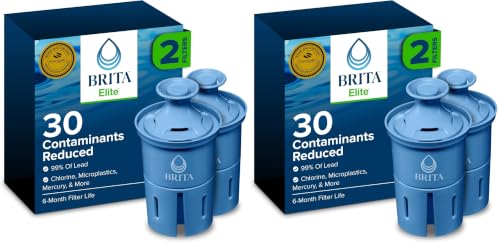
- The information below is per-pack only
- REDUCES 99% OF LEAD + 30 CONTAMINANTS*: 2-Count pack of Brita Elite replacement filters uses Advanced.
- Each Elite filter lasts 120 gallons or about 6 months, meaniing fewer replacements and more savings per filter
- Each Elite filter replaces up to 900 single-use 16.9 oz plastic bottles , this 2-Count pack replaces up to.
If you need only a single replacement filter, the Brita Elite Replacement Water Filter, Pitchers and Dispensers, 1 Pack provides the same WQA and NSF/ANSI certified performance, reducing 99% of lead and over 30 contaminants. It offers the same 120-gallon or 6-month lifespan as the filters in the multi-pack.

- REDUCES 99% OF LEAD + 30 CONTAMINANTS*: 1-Count pack of Brita Elite replacement filter uses Advanced.
- Each Elite filter lasts 120 gallons or about 6 months, meaniing fewer replacements and more savings per filter
- Each Elite filter replaces up to 900 single-use 16.9 oz plastic bottles , this 1-Count pack replaces up to.
- Elite filters are engineered with a dense carbon core for superior, consistent contaminant reduction.
The cost of Brita Elite replacement filters is a regular maintenance expense. A single filter typically costs around $15 to $20, while purchasing multi-packs often provides better value per filter. This is a normal and expected part of maintaining your filtered water system.
To learn more about what these certifications mean for your water quality, you can review our guide: NSF 42 vs 53 vs 401 vs 58: Water Filter Certifications Explained
Water Quality and External Factors
The quality of your source water significantly impacts how quickly your Brita Elite filter might slow down. High levels of sediment or dissolved solids can accelerate clogging, even if the filter is relatively new.
High Sediment Load
If your tap water frequently appears cloudy, or if you see visible particles, it has a high sediment load. This can happen in older homes with aging pipes, or when your municipal water utility is performing work on water mains. A Brita Elite filter will attempt to filter out this sediment, but it will clog much faster than usual, leading to a premature slowdown.
Well Water Usage
Brita Elite filters are designed for use with treated municipal tap water. They are not intended for filtering untreated well water. Well water often contains heavy sediment, iron, manganese, or microbiological contaminants like bacteria and viruses that a pitcher filter cannot reliably remove. If you use well water, get it tested by a certified lab. Do not rely on a Brita filter to make well water safe to drink. Well water requires a dedicated, multi-stage treatment system.
Water Temperature
While usually a minor factor, very cold water can exhibit slightly increased viscosity compared to room-temperature water. This can, in turn, cause a marginal reduction in flow rate through the dense filter media. This effect is generally not significant enough to be the primary cause of a very slow drip, but it can contribute to overall slower filtration.
When to Consider a Different Solution
If your Brita Elite filter consistently clogs and slows down well before its 6-month or 120-gallon lifespan, your tap water likely contains unusually high levels of sediment. In such cases, a pitcher filter might not be the most economical or convenient long term solution.
- Whole-House Sediment Filter: For homes with persistent sediment issues, installing a whole-house sediment filter can protect all your plumbing and appliances, including your Brita pitcher. These systems typically cost $150 to $500 for the unit itself, plus professional installation fees, which can range from $200 to $600.
- Dedicated Well Water Treatment: If you use well water, a multi-stage well water treatment system is necessary. This often includes sediment filtration, iron removal, and potentially UV purification for bacteria. Such systems range from $1,000 to $5,000 or more, requiring professional design and installation.
If your local water utility issues a boil water notice, your Brita Elite filter cannot make the water safe. Always boil all water before consumption and follow the specific instructions and guidelines provided by your local health department.
Pitcher or Dispenser Issues
Sometimes, the issue is not with the filter itself but with the pitcher or dispenser housing it. These problems are less common but can certainly lead to slow filtration or other performance issues.
Reservoir Cracks or Leaks
A hairline crack or a tiny gap in the reservoir where the filter sits can allow water to bypass the filter entirely. This means less water is actually passing through the filter media, creating the impression of a very slow drip, even if the filter itself is functioning normally. Inspect your pitcher carefully for any visible damage or signs of leakage around the filter housing.
Lid Obstruction
The lid of your Brita pitcher or dispenser is designed to fit snugly. If the lid is misaligned or has internal components that are slightly out of place, it can prevent the filter from seating correctly. This can cause similar issues to an improperly seated filter, leading to bypass or restricted flow. Make sure the lid aligns perfectly and does not interfere with the filter's position.
Cleaning and Mineral Buildup
Over time, mineral deposits from hard water or even a thin layer of biofilm (slime) can accumulate in the reservoir or around the filter seating area. This buildup can impede water flow or prevent the filter from forming a proper seal. Regularly clean your Brita pitcher or dispenser with warm, soapy water and rinse it thoroughly to prevent such issues.
Cost to Replace Pitcher
If your Brita pitcher or dispenser has a crack, a broken lid, or other irreparable damage that affects its function, replacement is the only option. A new Brita pitcher or dispenser typically costs between $20 and $50, depending on the model and capacity. This is a relatively inexpensive fix compared to more complex home filtration systems.