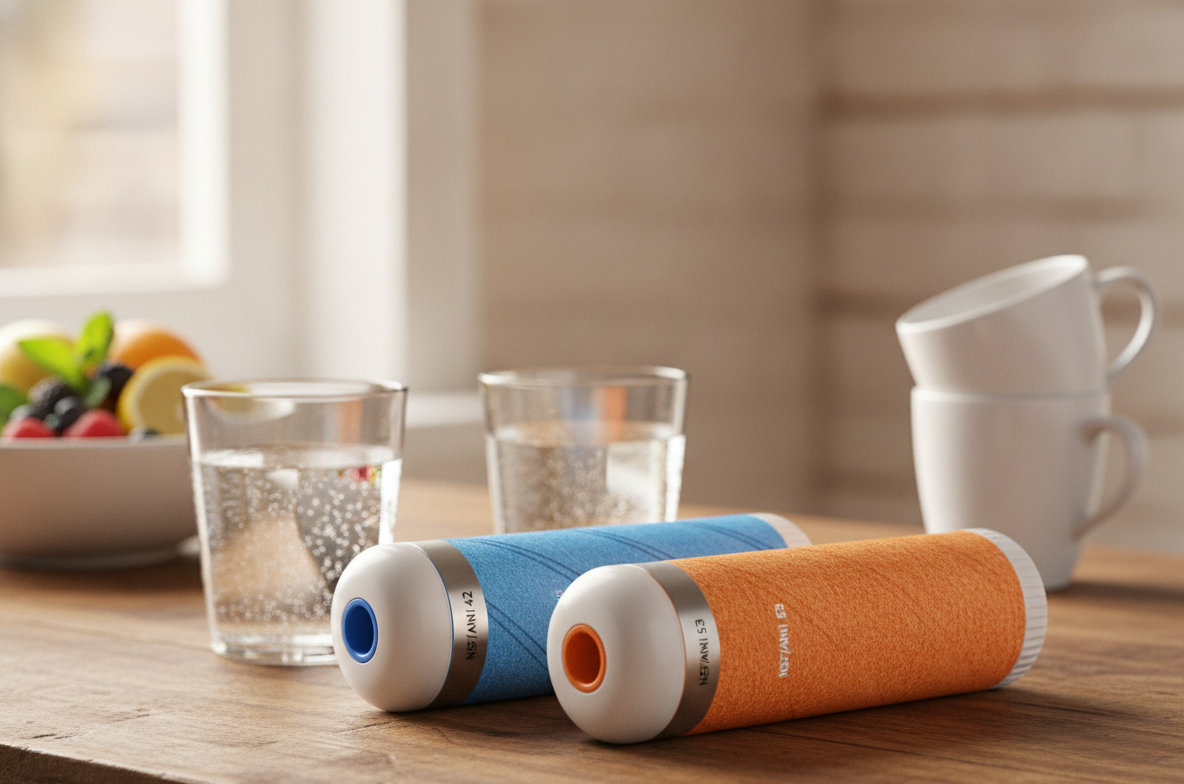
A water filter’s certification to NSF/ANSI Standard 42 means it reduces aesthetic issues like chlorine taste and odor, without making health claims. In contrast, certification to NSF/ANSI Standard 53 confirms the filter reduces specific health-related contaminants, such as lead or cysts. Understanding these distinctions, along with other standards like NSF/ANSI 58 for reverse osmosis systems and NSF/ANSI 401 for emerging compounds, allows consumers to choose filters that address their specific water quality concerns.
What Water Filter Certifications Mean
Water filter certifications provide independent verification that a product performs as advertised. These certifications are not self-proclaimed. They come from third-party organizations accredited by the American National Standards Institute (ANSI). Reputable certification bodies include NSF International (NSF), the International Association of Plumbing and Mechanical Officials (IAPMO), and the Water Quality Association (WQA). Each of these organizations can test and certify products to the same NSF/ANSI standards.
When a product carries a certification mark, it signifies that the model has undergone rigorous testing against specific criteria within a standard. This testing confirms the product's contaminant reduction capabilities, structural integrity, and material safety. performance data sheet. The certification does not automatically verify every claim made on the product packaging.
Consumers can verify a product's certification by checking the online databases maintained by the certifying bodies. These databases allow searching by manufacturer, product type, or specific standard to confirm a model's current certification status and its certified contaminant reduction capabilities. This step helps consumers make informed decisions.
NSF/ANSI 42: Aesthetic Effects
NSF/ANSI 42 focuses on the aesthetic quality of drinking water. Filters certified to this standard reduce non-health-related contaminants that affect the taste, odor, or appearance of water. The most common aesthetic issues addressed by NSF/ANSI 42 include chlorine taste and odor. This standard also covers particulate reduction, which improves water clarity.
A filter certified to NSF/ANSI 42 is designed to make water more palatable and visually appealing. For example, a pitcher filter certified to NSF/ANSI 42 for chlorine reduction will significantly improve the taste of tap water that has a strong chlorine smell. This standard does not make any claims about removing contaminants that pose a health risk. It only addresses the sensory characteristics of water.
When a new carbon cartridge runs slower for the first few days, it is usually holding trapped air, not clogged. This is a common experience with filters designed to improve aesthetic qualities like taste and odor.
NSF/ANSI 53: Health-Related Contaminants
NSF/ANSI 53 is a critical standard for filters that claim to reduce health-related contaminants. Unlike NSF/ANSI 42, this standard addresses substances that can impact human health. A product is certified under NSF/ANSI 53 only for the specific contaminants listed on its performance data sheet. Common contaminants covered by this standard include lead, cysts (such as Cryptosporidium and Giardia), and certain volatile organic compounds (VOCs).
For lead reduction under NSF/ANSI 53, a filter is challenged with water containing 150 parts per billion (ppb) of lead. The filtered water must contain 5 ppb of lead or less to meet the standard. This 5 ppb limit was established with the 2019 revision of the standard. Previously, the limit was 10 ppb. The U.S. Environmental Protection Agency's (EPA) June 2024 consumer guide advises shoppers to look for filters certified to reduce lead to 5 ppb or less and certified for Class I particulate reduction. This aligns with the current NSF/ANSI 53 standard for lead.
Cyst reduction is another important aspect of NSF/ANSI 53. For a filter to be certified for cyst reduction, it must demonstrate at least a 99.95 percent reduction of cysts in the water. This level of reduction helps protect against waterborne parasites. When choosing a filter, always refer to the manufacturer's performance data sheet to confirm the specific contaminants and reduction percentages for which the filter is certified.
For example, if a family is concerned about lead in their drinking water, they would look for a filter specifically certified to NSF/ANSI 53 for lead reduction. If the concern is about microscopic parasites, they would seek certification for cyst reduction. Checking the performance data sheet for these specific claims is essential.
NSF/ANSI 58: Point-of-Use Reverse Osmosis Systems
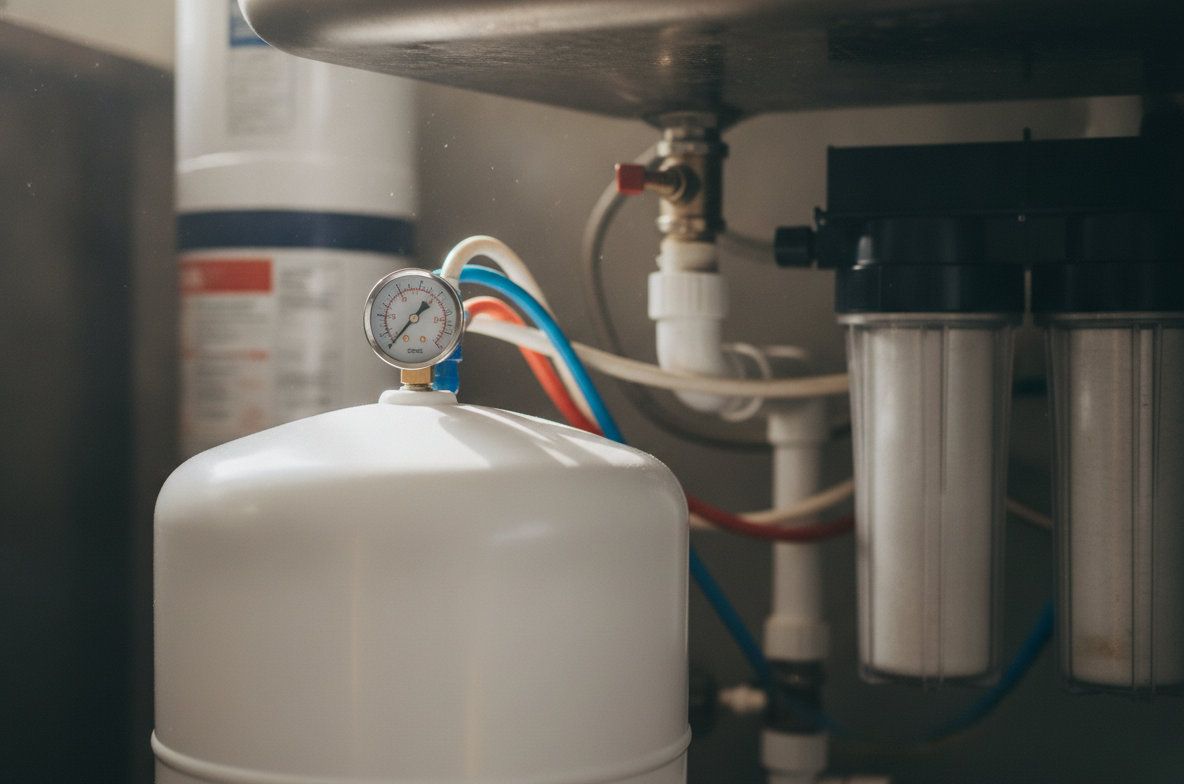
NSF/ANSI 58 specifically applies to point-of-use reverse osmosis (RO) drinking water systems. This standard is unique because it tests the entire RO system, including all pre-filters, the RO membrane, and any post-filters. This whole-system approach helps make sure every component contributes to the system's overall performance and safety.
Reverse osmosis systems certified to NSF/ANSI 58 are often highly effective at reducing a wide range of contaminants, including total dissolved solids (TDS), fluoride, arsenic, and lead. For lead reduction under NSF/ANSI 58, the same stringent requirement as NSF/ANSI 53 applies: the system must reduce lead from an initial concentration of 150 ppb to 5 ppb or less in the filtered water. This makes RO systems a strong option for lead removal.
When considering an RO system, verifying its NSF/ANSI 58 certification on the manufacturer's performance data sheet confirms its ability to reduce specific contaminants. For instance, an RO system with a tank that is not filling might indicate an issue with the membrane or pre-filters, which are all part of the system tested under NSF/ANSI 58. Reverse Osmosis Tank Not Filling? 7 Fixes
NSF/ANSI 401: Emerging Compounds/Incidental Contaminants
NSF/ANSI 401 addresses emerging compounds and incidental contaminants, which are typically found at trace levels in drinking water. These contaminants include certain pharmaceuticals, herbicides, pesticides, and flame retardants. This standard recognizes that new substances are continually being identified in water supplies and provides a testing protocol for their reduction.
The NSF/ANSI 401 standard lists up to 15 specific compounds for which a filter can be certified. However, a product is only certified for the specific compounds named on its listing and performance data sheet. For example, a filter might be certified to reduce ibuprofen or naproxen, but not necessarily all 15 compounds covered by the standard. Consumers must check the product documentation to confirm which specific emerging contaminants a filter is certified to reduce.
This standard is particularly relevant for those concerned about newer contaminants not traditionally covered by older standards. It provides a means to assess filter effectiveness against a modern array of trace substances.
Other Important Water Treatment Standards
Beyond the core contaminant reduction standards, several other NSF/ANSI standards address various aspects of water treatment and product safety:
NSF/ANSI 55: Ultraviolet Microbiological Treatment Systems
NSF/ANSI 55 covers ultraviolet (UV) microbiological treatment systems. These systems use UV light to inactivate bacteria and viruses. The standard categorizes UV systems into two classes:
- Class A systems These systems typically use higher UV dosages.
- Class B systems provide supplemental treatment for water that is already considered microbiologically safe, such as public water that has already been disinfected. These systems are not intended for treating water from unknown sources or water under a boil notice.
Consumers should understand the distinction between Class A and Class B systems to select the appropriate UV treatment for their specific water source and concerns. For instance, a Class B system for municipal water helps provide an extra layer of protection, but it is not a substitute for proper disinfection by the water utility.
NSF/ANSI 44: Cation Exchange Water Softeners
NSF/ANSI 44 applies to cation exchange water softeners, which are commonly used in homes to reduce hardness minerals like calcium and magnesium. This standard evaluates the system's ability to reduce hardness, its efficiency, and the structural integrity of the softener components. It also covers the regeneration process, where salt is used to recharge the resin beads in the softener.
A water softener not using salt, for example, could indicate a problem with the regeneration cycle, which would be covered by the performance parameters of NSF/ANSI 44. Water Softener Not Using Salt? Salt Bridges and Other Causes
NSF/ANSI/CAN 61 and NSF/ANSI 372: Material Safety and Lead Content
These two standards address the safety of materials that come into contact with drinking water. They are not about contaminant reduction from the water itself:
- NSF/ANSI/CAN 61: This standard covers all plumbing components that contact drinking water. It tests for the leaching of potentially harmful substances from materials into the water. This includes pipes, faucets, and filter housings.
- NSF/ANSI 372: This standard specifically focuses on the lead content of materials that touch drinking water. It makes sure components meet low-lead requirements, aligning with regulations designed to minimize lead exposure from plumbing fixtures.
Both NSF/ANSI/CAN 61 and NSF/ANSI 372 are important for making sure the filter itself, or the plumbing it connects to, does not introduce new contaminants into the water. These certifications are often found on filter housings, faucets, and other water contact parts, independent of the filter's ability to remove contaminants.
How to Verify a Filter's Certification
The first step is to locate the certification mark on the product packaging or the filter itself. This mark typically includes the logo of the certifying body (NSF, IAPMO, WQA) and the specific NSF/ANSI standard number.
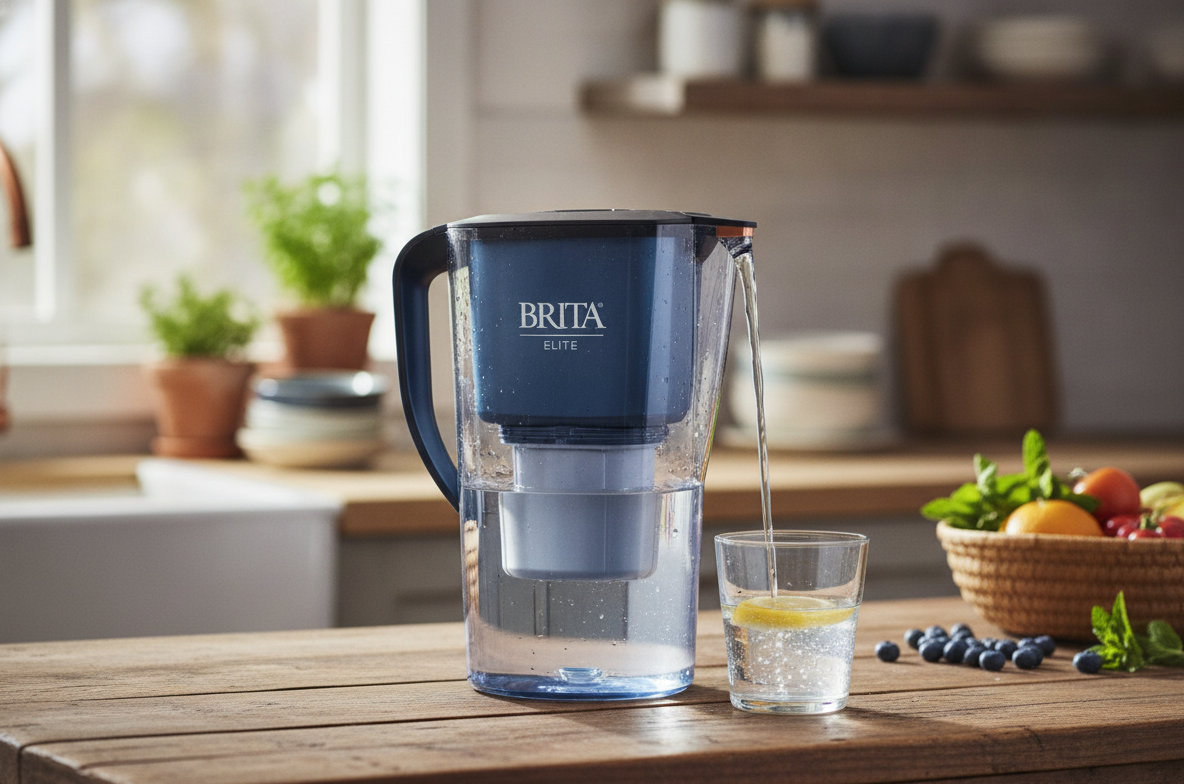
Next, consult the certifying body's online product listing database. These databases are publicly accessible and allow users to search by manufacturer name, product model number, or the specific standard. For example, if you have a Brita Elite filter that runs slow, you can check its certification against the manufacturer's claims. Brita Elite Filter Slow? Why It Drips and How to Fix It
When searching, make sure the model number on the product exactly matches the one listed in the database. Also, carefully review the specific contaminants listed on the product's performance data sheet. This document details which substances the filter is certified to reduce and the percentage or level of reduction achieved. A certification mark on the box does not mean the filter removes everything. It only means it removes what is listed on its data sheet according to the standard.
For installations that involve cutting into supply lines, always shut off the main water supply first. If you are unsure about the installation process, use a licensed plumber to avoid leaks or damage. For example, a PUR faucet filter leaking after installation might suggest an issue with the connection or O-rings. PUR Faucet Filter Leaking? Causes and Fixes by Leak Spot
Choosing the Right Certified Filter
Selecting the appropriate certified water filter begins with understanding your water quality. A certified lab water test provides a detailed report of the contaminants present in your water, especially for well water users. For municipal water, your local water utility provides an annual Consumer Confidence Report (CCR) that lists detected contaminants. This information helps you identify which specific contaminants you need to filter.
Once you know your water's contaminant profile, look for filters certified to the relevant NSF/ANSI standards for those specific substances. If lead is a concern, seek NSF/ANSI 53 or 58 certification for lead reduction to 5 ppb or less. If chlorine taste is the primary issue, NSF/ANSI 42 certification is sufficient. For emerging contaminants, check for NSF/ANSI 401 certification for the specific compounds identified in your water report.
Never assume a filter makes water safe under these conditions without specific, lab-verified testing after filtration and adherence to official advisories. Filters certified to NSF/ANSI 55 Class B, for example, are for supplemental treatment of public water already disinfected, not for making unsafe water safe.
Always check the manufacturer's performance data sheet for the listed standard and specific contaminant reduction claims. This document is the authoritative source for a filter's certified capabilities. For refrigerator filters, like a Samsung fridge water dispenser running slow after a filter change, confirming its NSF certification means it will perform as expected for the listed contaminants. Samsung Fridge Water Dispenser Slow After Filter Change? Fixes