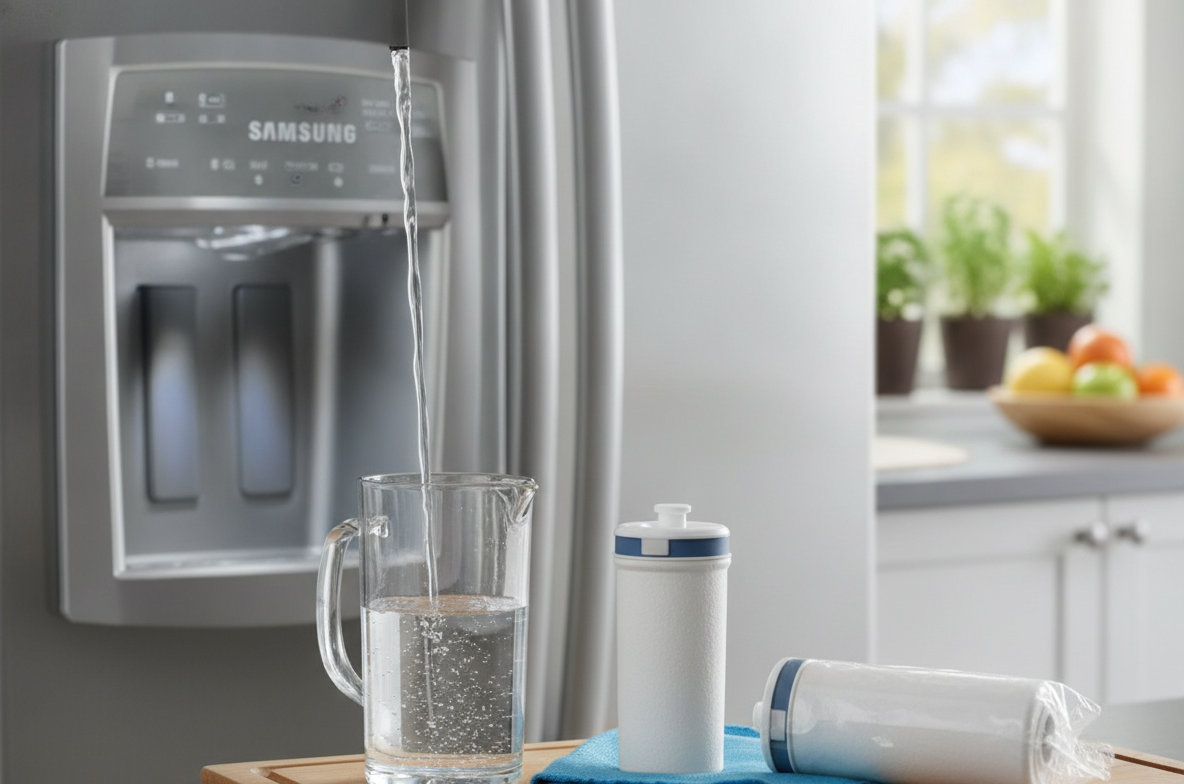
A new carbon cartridge that runs slow for the first few days is usually holding trapped air, not clogged. Many Samsung refrigerator owners encounter reduced water flow from their dispenser shortly after replacing the water filter. This issue can be frustrating, but most causes are simple to diagnose and fix at home.
Trapped Air in the New Filter Cartridge
The most common reason for slow water flow after a filter change is air trapped within the new filter cartridge and the water lines. New carbon block filters, in particular, hold a significant amount of air that needs to be purged from the system. This air creates resistance, slowing the water flow.
How to Bleed Air from the System
- After installing the new filter, dispense water continuously for about 3 to 5 minutes, or until at least 2 to 3 gallons have been dispensed. Use a large pitcher or container to collect the water.
- During this process, the water flow may sputter, stop, or remain slow. This is normal as air is being pushed out.
- Once the air is purged, the water flow should return to normal speed and clarity. If it does not, continue dispensing for another minute or two.
This initial flushing also removes any carbon fines or loose particles from the new filter, which can cause a temporary cloudy appearance or a slightly different taste. These particles are harmless but should be flushed out before drinking.
Incorrect Filter Installation or Incompatible Filter Type
An improperly installed filter or using the wrong type of filter can severely restrict water flow. Samsung refrigerators use specific filter models, and even slight variations can lead to poor fit or blockage.
Confirm Correct Filter Model
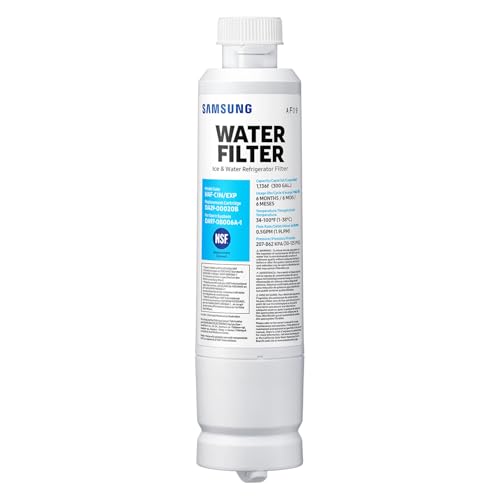
This article focuses on troubleshooting issues with refrigerators that use the round DA29-00020B filter, also sold as HAF-CIN and HAF-CIN/EXP. Other Samsung models use different filters, such as DA29-00003G (HAF-CU1) and DA97-17376B (HAF-QIN). Always match the part number on your current filter or in your refrigerator's owner's manual before buying a replacement.
Steps to Check Installation
- Remove and Reinsert: Turn off the water supply to the refrigerator. Carefully remove the filter. Inspect the O-rings for damage or misalignment. Reinsert the filter, making sure it twists fully into place and locks securely. You should feel a slight click or firm resistance when it is correctly seated.
- Check for Genuine Filter: Using a genuine SAMSUNG filter, like the SAMSUNG Genuine Filter for Refrigerator Water and Ice, helps make sure proper fit and performance. Genuine Samsung filters carry an authentication tag. Detach this tag to make sure your filter is a genuine Samsung filter. An authentic filter reduces contaminants, giving your family fresh tasting water. Samsung’s ultra-high-grade carbon block reduces 99% of potentially harmful contaminants.
- Verify Compatibility: If you are using a third-party filter, confirm it is explicitly listed as compatible with your refrigerator's exact model number and the DA29-00020B part number. A third-party filter that does not lock fully into the housing can restrict flow or leak. If you need an alternative replacement for the DA29-00020B, options like the Waterspecialist Water Filter Replacement for Samsung® DA29-00020B or ICEPURE Water Filter Replacement for Samsung DA29-00020B HAF-CIN/EXP are available. Always confirm the part number on your existing filter or in your refrigerator's manual to make sure of compatibility.
- Bypass Plug Test (Caution): Some Samsung refrigerators dispense water with the filter removed, while others require a bypass plug, and some will not dispense at all. Check your refrigerator's owner's manual before attempting to remove the filter as a test. If your model allows it, remove the filter and insert the bypass plug (usually stored with your refrigerator's manual or accessories). If water flow returns to normal with the bypass plug, the issue is with the filter itself or its housing.
Replacement filters typically cost between $20 and $60 each, with multi-packs offering a lower per-filter price.
Clogged Water Supply Line
Over time, sediment or mineral buildup can restrict the water flow in the supply line leading to the refrigerator. Kinks in the line, often occurring when the refrigerator is moved for cleaning or maintenance, can also cause blockages.
How to Inspect and Fix a Clogged Line
- Turn Off Water: Locate the shut-off valve for the refrigerator's water supply, usually behind the unit or under the sink. Turn it off.
- Disconnect Line: Disconnect the water supply line from the back of the refrigerator and from the main water supply valve.
- Check for Kinks: Examine the entire length of the plastic or copper line for any bends or kinks that could impede water flow. Straighten any kinks you find.
- Flush the Line: Place the disconnected end of the supply line into a bucket and briefly turn on the water supply valve to flush out any sediment. This also checks the pressure coming from the wall.
- Inspect Inlet Valve: The water inlet valve on the back of the refrigerator can also become clogged. With the water supply off, disconnect the line from the inlet valve and check the small screen filter at the valve's entrance for debris. Clean it gently with a small brush if needed.
- Reconnect and Test: Reconnect all lines, turn the water supply back on, and test the dispenser.
Fixing a kinked line costs nothing. Clearing a minor clog is also free, but if the inlet valve needs replacement, parts can cost $30-$80, plus potential labor if you call a technician. A call-out fee for an appliance technician can range from $75 to $150.
Frozen Water Line or Reservoir
If your refrigerator's freezer section is set too cold, or if there is an issue with the refrigerator's internal temperature regulation, the water line inside the freezer door or the water reservoir tank can freeze. A frozen line will drastically slow or completely stop water flow.
Identifying and Thawing a Frozen Line
- Listen for Pump: Try to dispense water and listen for the sound of the water pump. If you hear it working but no water comes out, or only a trickle, a frozen line is a strong possibility.
- Check Freezer Temperature: Make sure the freezer temperature is not set too low, typically between 0°F and 5°F (-18°C and -15°C).
- Thaw the Line: The safest way to thaw a frozen line is to unplug the refrigerator and leave the freezer door open for several hours. Move food out of the refrigerator or into a cooler first. Placing a fan to blow into the freezer can speed up the process. Do not use a hairdryer or heat gun directly on the water line, as this can damage components.
- Check Door Gasket: Make sure the freezer door gasket seals properly. A faulty gasket can allow warm, moist air into the freezer, leading to condensation and freezing of the water line.
Thawing a frozen line typically costs nothing beyond the inconvenience of moving food. If the issue recurs, it might indicate a problem with the refrigerator's thermostat or damper, which could require professional repair costing $150-$400 or more depending on the part.
Low Household Water Pressure
The refrigerator's water dispenser relies on adequate household water pressure. If your home's overall water pressure is low, it will affect the dispenser's performance, especially after a filter change which adds a slight pressure drop.
How to Check Water Pressure
- Test Other Faucets: Open a nearby kitchen or bathroom faucet. If the flow from these faucets is also weak, your home likely has low water pressure.
- Check Main Shut-Off Valve: Make sure your home's main water shut-off valve is fully open. Sometimes it can be partially closed, reducing pressure.
- Inspect Pressure Regulator: If your home has a pressure regulator (often found near the main water meter), it might be malfunctioning or set too low. Adjusting or replacing a pressure regulator typically requires a licensed plumber. The cost for a new pressure regulator and installation can range from $200 to $500.
Addressing low household water pressure is often a larger plumbing issue. If you suspect low pressure, contacting a licensed plumber is recommended. Reverse Osmosis Tank Not Filling? 7 Fixes can offer additional context on water pressure issues in filtration systems.
Faulty Dispenser or Water Valve
While less common, a faulty water inlet valve, dispenser solenoid, or even the dispenser paddle switch can cause slow water flow. These issues are typically not related to a filter change but might manifest at the same time.
Diagnosing Component Failure
- Water Inlet Valve: If the valve is failing, it might not open fully, restricting water flow. You may hear a buzzing sound from the back of the refrigerator when trying to dispense water, but with little to no flow.
- Dispenser Solenoid: This component controls the water flow to the dispenser. A weak or failing solenoid can lead to slow flow.
- Dispenser Switch: A worn or faulty paddle switch might not fully activate the water valve, resulting in weak dispensing.
Diagnosing and replacing these components usually requires specific tools and expertise. It is often best to call an appliance repair technician for these types of issues. Parts for these repairs can range from $30 to $100, plus the technician's labor fees, which can add $100-$300 to the total cost. If you are unsure about cutting into your water supply lines, shut off the water first and use a licensed plumber.
Resetting the Filter Indicator Light
The filter indicator light on your Samsung refrigerator does not directly affect water flow, but resetting it is an important step after changing the filter. This ensures the refrigerator tracks the filter's lifespan correctly.
How to Reset
The exact reset procedure varies by Samsung model. Most models require you to press and hold the Ice Type and Child Lock buttons simultaneously for three seconds, or press and hold the Filter button for three to five seconds. Refer to your refrigerator's owner's manual for the precise steps for your specific model. The filter indicator light should turn off or change from red to green/blue.